
How bees cope in a drought
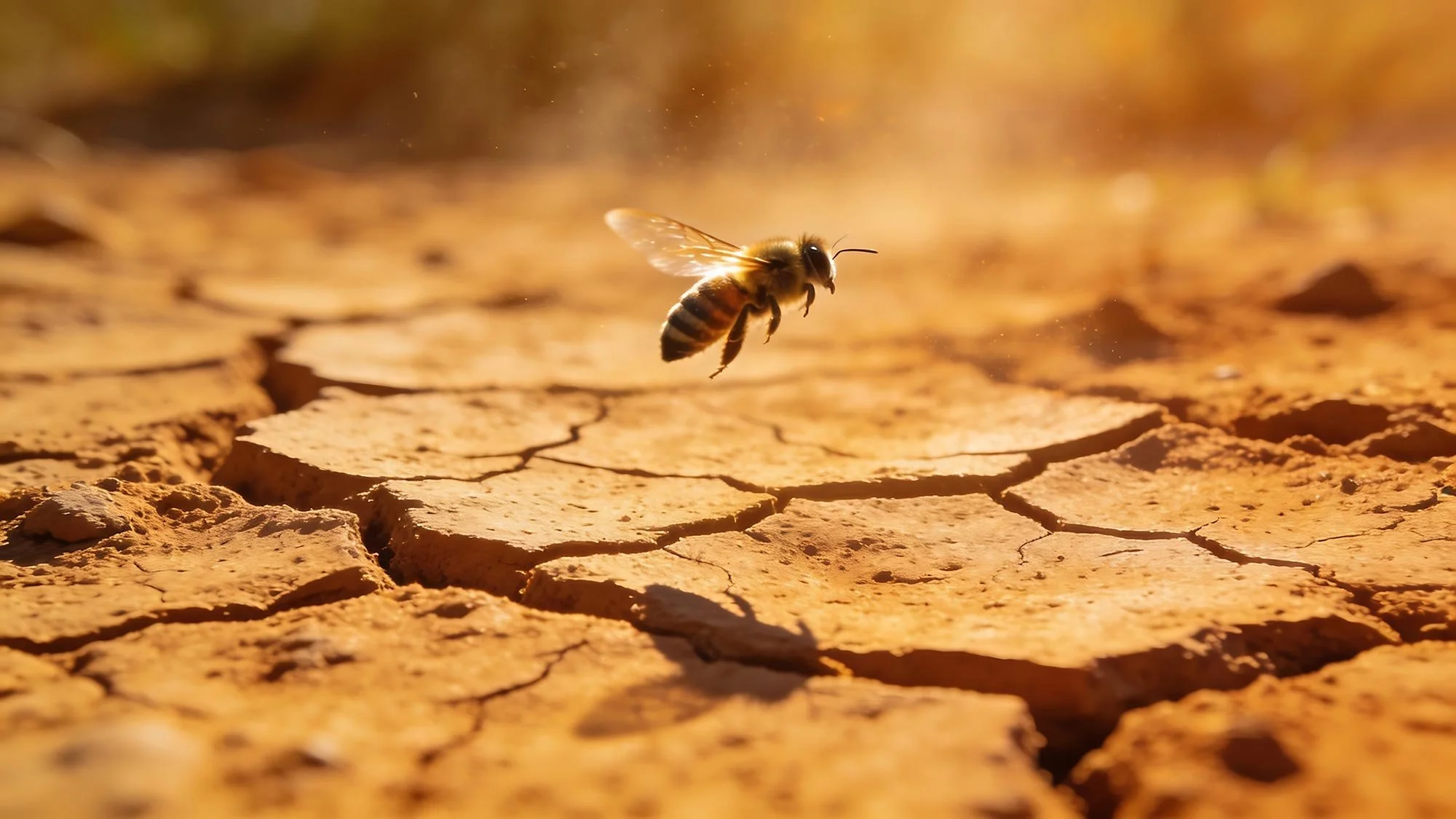
Hot, dry weather can be difficult for bees. Although sunny days may seem ideal for them, a prolonged lack of rain can reduce the amount of food and water available across the landscape.
Bees are highly adaptable, but drought puts extra pressure on both honey bees and wild pollinators.
Flowers may produce less food
Bees depend on flowers for nectar and pollen. Nectar provides energy, while pollen supplies protein and other nutrients.
During a drought, plants may produce fewer flowers or less nectar as they conserve water. Some flowers may look healthy but offer very little food.
This means bees may need to fly further and visit more flowers to collect the same amount of nectar and pollen. In severe conditions, there may simply not be enough forage available.
Bees need water too
Bees do not only use water for drinking. Honey bees also carry water back to the hive to help keep it cool.
When temperatures rise, worker bees spread droplets of water inside the hive and fan their wings. As the water evaporates, it helps lower the temperature, acting like a natural air-conditioning system.
Bees also need water to prepare food for their young and to dilute stored honey.
During a drought, natural sources such as puddles, damp soil and shallow streams may disappear, making water harder to find.
Why bees sometimes gather outside the hive
On very hot days, honey bees may gather in a large cluster outside the entrance of their hive. This behaviour is known as bearding.
It can look worrying, but it is often completely normal. By moving outside, some bees reduce crowding and heat inside the hive, helping the colony maintain a safer temperature.
Honey bees rely on stored food
Honey bee colonies store honey for periods when flowers are scarce. During a drought, they may begin eating these reserves because less fresh nectar is coming into the hive.
If the shortage continues, the colony may also reduce the number of young bees it raises. This lowers the amount of food needed and helps the colony conserve its remaining resources.
Wild bees do not have the same large stores of honey. They depend much more directly on the flowers available around them, which can make prolonged drought especially challenging.
How you can help bees during dry weather
One of the easiest ways to help is to provide a safe source of water.
Use a shallow dish or plant saucer filled with clean water. Add stones, pebbles, corks or twigs so bees can land safely without falling in. Keep the water topped up and change it regularly.
You can also support bees by growing a mixture of flowering plants that bloom at different times of year. During dry weather, watering a few bee-friendly plants can help them continue producing nectar.
Herbs such as lavender, thyme, rosemary, mint and marjoram can be particularly useful when allowed to flower.
Avoid using pesticides on flowering plants, especially when natural food is already scarce.
Small actions can make a difference
Bees have clever ways to survive heat and temporary shortages. They travel further, collect water, cool their nests and carefully manage their food.
However, even the most adaptable bees struggle when both water and flowers disappear for long periods.
Providing a shallow water source, keeping a few plants flowering and making gardens more pollinator-friendly can offer valuable support during a drought. Small actions across many gardens can make a meaningful difference.